Safety doesn’t happen by accident. Neither does awareness. In high-risk environments—construction sites, manufacturing plants, utility operations—one of the most effective defenses against incidents isn’t a piece of gear or a policy manual. It’s a five- to ten-minute conversation. That’s the power of a well-run toolbox talk.
Yet, too often, these brief safety huddles are treated as box-ticking exercises. Supervisors rush through templates, workers nod along, and the real opportunity—proactive hazard identification, engagement, and behavioral change—slips away. The purpose of toolbox talks isn’t to comply with a checklist. It’s to create a shared understanding of risk, reinforce safety norms, and build a culture where everyone feels responsible for safety.
Let’s cut through the routine and uncover what makes these short sessions matter.
Why Toolbox Talks Exist—Beyond Compliance
At their core, toolbox talks serve as micro-interventions in risk management. Their primary purpose isn’t to satisfy OSHA or internal audits—though documentation helps. It’s to pause momentum, recalibrate focus, and address the specific risks present today, on this job, with this crew.
Consider this: A utility crew arrives onsite to repair a downed power line. Weather has been erratic, traffic is heavy, and tension is high. A generic safety talk about PPE won’t cut it. But a focused 7-minute discussion on situational hazards—wet ground conditions, unexpected vehicle movement, communication breakdowns—can reset mental focus and reduce the chance of error.
That’s the real value: relevance. Toolbox talks are designed to be immediate, contextual, and actionable. They turn abstract safety rules into concrete behaviors.
Common mistakes that undermine their purpose: - Reading from a script without adaptation - Holding talks at the wrong time (e.g., after work has already started) - Failing to involve the team in discussion - Ignoring follow-up or accountability
When done right, they’re not monologues. They’re two-way exchanges that surface concerns before they become incidents.
Preventing Accidents Through Targeted Risk Awareness
Most workplace accidents don’t stem from ignorance of broad safety rules. They happen because of overlooked details—a misjudged load, a slippery surface, a communication gap during shift change.
Toolbox talks shine in closing those gaps. By focusing on a single hazard or task each session, they train workers to spot red flags in real time.
For example: - A construction crew preparing to operate a scissor lift holds a talk on overhead clearance, anchor points, and emergency stop procedures. One worker recalls a previous incident—crucial intel that reshapes the plan. - A maintenance team about to enter a confined space discusses air monitoring, rescue setup, and signal checks. The talk prompts a last-minute equipment inspection that reveals a faulty gas detector.
These aren’t hypotheticals. They’re routine wins that prevent near-misses from escalating.
The purpose? To make hazard recognition habitual. Repetition builds pattern recognition. Over time, workers don’t just hear about risks—they start seeing them independently.
Strengthening Communication and Team Accountability
Safety is a team sport. But in fast-moving, decentralized work environments, communication often breaks down. That’s where toolbox talks act as a forced sync point.
When a supervisor gathers the crew, the message is clear: We’re on the same page. We watch out for each other.

In practice, this means: - New workers hear firsthand from experienced team members - Language or cultural barriers are addressed in real time - Roles and responsibilities are clarified before work begins
A mining operation in Western Australia, for instance, reduced miscommunication-related incidents by 38% after implementing structured toolbox talks with visual aids and multilingual summaries. The change wasn’t in technology—it was in making safety dialogue inclusive and consistent.
When everyone speaks up, accountability spreads. Workers are more likely to correct unsafe behaviors when they’ve just discussed them together. The social contract is reinforced daily.
Driving Engagement in Safety Culture
One of the biggest challenges in safety management? Apathy.
Workers may view safety as something imposed by management—rules from above, not values from within. Toolbox talks, when facilitated well, flip that script.
By rotating who leads the talk, asking open-ended questions (“What’s one thing that worries you about today’s task?”), or encouraging workers to share past experiences, you shift from compliance to ownership.
Real example: A roadwork crew in Minnesota began letting team members choose weekly topics. One laborer led a session on hand protection after nearly losing a fingertip on a poorly guarded saw. The raw, personal delivery had more impact than any corporate video.
This is how safety culture grows—not through mandates, but through moments of shared vulnerability and learning.
When workers feel heard, they’re more likely to internalize safety as personal responsibility, not just procedure.
Reinforcing Training
with Real-World Application
Classroom training teaches principles. Toolbox talks apply them.
A forklift operator may pass certification with flying colors. But when fatigue sets in during a long shift, or when a tight deadline pressures speed over caution, theoretical knowledge can fade.
A targeted toolbox talk before a material handling task—focusing on load stability, pedestrian zones, and fatigue signs—re-anchors training in the present. It bridges the gap between “I know this” and “I’m doing this right now.”
This reinforcement is especially critical for: - New hires during onboarding - Infrequent or high-risk tasks - After incidents or near-misses
The purpose? To keep safety top of mind, not buried in a manual. Repetition through context cements behavior.
Adapting to Change—Weather, Staff, Equipment
Work environments are fluid. A plan from Monday may not fit Wednesday. New crew members arrive. Equipment fails. Weather shifts. These changes introduce new risks—often faster than formal procedures can respond.
Toolbox talks are agile by design. They’re meant to adapt in real time.
For instance: - A sudden rainstorm makes scaffolding slippery. The morning talk pivots to fall protection and surface inspection. - A key team member calls in sick. The talk focuses on task redistribution and communication gaps. - A new piece of machinery is introduced. The session covers startup procedures and emergency shutdown.
This responsiveness is a core part of their purpose. They’re not meant to repeat the same content daily. They’re meant to react—to assess, adjust, and align.
Organizations that treat them as dynamic tools, not static scripts, see fewer surprises and better outcomes.
Practical Tips for Maximizing Impact
To unlock the full purpose of toolbox talks, follow these proven strategies:

1. Keep it short and focused Aim for 5–10 minutes. One topic per session. Overloading dilutes impact.
2. Make it visual Use photos, props, or sketches. A picture of a frayed cable sparks more attention than a verbal description.
3. Rotate facilitators Let workers lead. It builds confidence and ownership.
4. Encourage questions and stories “Has anyone experienced something like this before?” opens dialogue and surfaces hidden risks.
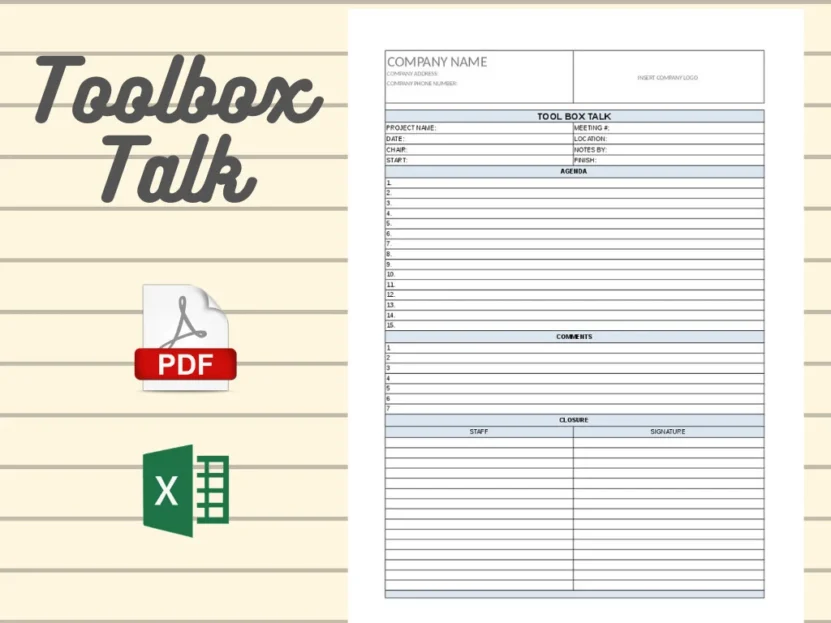
5. Document selectively Record attendance and topic—not a word-for-word transcript. Use it to track themes, not police compliance.
6. Follow up If a hazard is raised, address it. Nothing kills credibility faster than ignoring concerns raised in a talk.
7. Time it right Hold talks before work starts, not after. Relevance fades quickly.
Avoid treating them as a one-size-fits-all formality. The best sessions feel urgent, specific, and human.
Examples That Show the Purpose in Action
Case 1: Preventing a Fall A roofing crew in Texas held a toolbox talk on fall protection before starting work on a steep pitch. A new employee admitted he wasn’t confident using his harness. The supervisor paused work, retrained him onsite, and avoided a potential disaster.
Case 2: Catching a Gas Leak A gas utility team discussed excavation risks near pipelines. A veteran worker mentioned a “rotten egg” smell from a previous job. That prompted a pre-task sniff test—which detected a minor leak. Service was shut down safely.
Case 3: Reducing Back Injuries A warehouse team focused on lifting techniques. One worker demonstrated improper form during a mock lift. The group corrected him—and he later credited the session with helping him avoid injury during a heavy lift.
These aren’t miracles. They’re the direct result of consistent, purposeful communication.
The Bottom Line: Purpose Over Procedure
The purpose of toolbox talks isn’t to check a regulatory box. It’s to create a daily rhythm of awareness, communication, and mutual accountability. They’re the pulse of an active safety culture.
When done with intention, they do more than prevent accidents. They build trust. They amplify voices. They turn safety from a policy into a practice.
Don’t schedule them because you have to. Hold them because they work.
Start tomorrow: pick one real hazard your team faces. Talk about it. Ask questions. Listen. That’s how change begins.
FAQ
What is the main purpose of a toolbox talk? The main purpose is to proactively discuss job-specific hazards, reinforce safe behaviors, and promote team communication before work begins.
How long should a toolbox talk last? Ideally 5 to 10 minutes—long enough to cover a topic meaningfully, short enough to maintain focus.
Who should lead a toolbox talk? Typically a supervisor or team lead, but rotating facilitators—including workers—can increase engagement and ownership.
How often should toolbox talks be held? Daily or before starting high-risk tasks. Frequency depends on job complexity and risk level.
Can toolbox talks reduce workplace accidents? Yes. When focused and interactive, they help identify hazards early and reinforce safe practices, directly reducing incident rates.
Should toolbox talks be documented? Yes—record attendance, topic, and any actions. Avoid excessive paperwork; keep it simple and useful.
What topics are appropriate for toolbox talks? Any immediate safety concern: PPE use, weather impacts, equipment checks, emergency procedures, near-misses, or task-specific risks.
FAQ
What should you look for in The Real Purpose of Toolbox Talks in Workplace Safety? Focus on relevance, practical value, and how well the solution matches real user intent.
Is The Real Purpose of Toolbox Talks in Workplace Safety suitable for beginners? That depends on the workflow, but a clear step-by-step approach usually makes it easier to start.
How do you compare options around The Real Purpose of Toolbox Talks in Workplace Safety? Compare features, trust signals, limitations, pricing, and ease of implementation.
What mistakes should you avoid? Avoid generic choices, weak validation, and decisions based only on marketing claims.
What is the next best step? Shortlist the most relevant options, validate them quickly, and refine from real-world results.