When Eliud Kipchoge crossed the finish line in Vienna in 2019, he did more than break the two-hour marathon barrier—he exposed the limits of human performance fused with cutting-edge design. At his feet: a prototype of a shoe so light it could practically float off the pavement. Lighter than a bar of soap. And yet, it carried the force of a revolution.
That shoe, and the technology behind it, didn’t just push one man to a historic mark. It redefined what’s possible in marathon running. Today, elite athletes across the globe are lacing up footwear that weighs less than 7 ounces—less than the average bar of hotel soap—while delivering propulsion, cushioning, and energy return once thought impossible.
This isn’t just about weight. It’s about how shaving grams off a shoe can shift the calculus of endurance, efficiency, and speed at the highest levels of sport.
The Physics of "Lighter Than a Bar of Soap"
A standard bar of soap weighs about 3.5 to 4.5 ounces (100–125g). The latest generation of elite marathon racing shoes now dip below that threshold—some as light as 6.5 ounces (184g) for a men’s size 9.
But going lighter isn’t just about reducing material. It's about smart subtraction: removing dead weight while amplifying performance through strategic engineering.
Take the carbon fiber plate embedded in modern racing flats. It adds structure and stiffness but weighs mere grams. Paired with ultra-resilient, lightweight foams like Pebax or Nike’s ZoomX, the shoe delivers a trampoline-like response without bulk. The result? Less energy lost per stride. More forward momentum.
In practical terms, runners report feeling faster, not just being faster. One elite athlete described the sensation as “running on freshly pumped trampolines.” Another said, “It’s like the shoe wants to move before your foot does.”
But weight alone doesn’t win marathons. It’s the combination of minimal mass and maximum energy return that turns a fast shoe into a record-shattering machine.
How These Shoes Changed Marathon Racing
Before 2017, sub-2:03 marathons were rare. Since then, the world record has been shattered multiple times—each time with athletes wearing next-gen racing shoes.
The turning point? The Nike Vaporfly 4% launched in 2017. Independent studies found it improved running economy by up to 4%—hence the name. That may sound small, but over 26.2 miles, a 4% gain translates to nearly five minutes off a 2:10 marathon.
Since then, every major brand has scrambled to replicate and improve upon that formula: lightweight, bouncy midsoles, full-length carbon plates, and streamlined uppers.
Now, it's not just elites. At major marathons, over 80% of top finishers wear some version of this technology. And the results are undeniable: - 2022: Eliud Kipchoge wins Berlin in 2:01:09 - 2023: Kelvin Kiptum sets the current world record at 2:00:35—wearing the Adidas Adizero Adios Pro 3
Both shoes? Lighter than a bar of soap. Both performances? Statistically improbable without the footwear’s assistance.
Anatomy of a Record-Breaking Shoe
What exactly makes these shoes so effective? Let’s break them down:

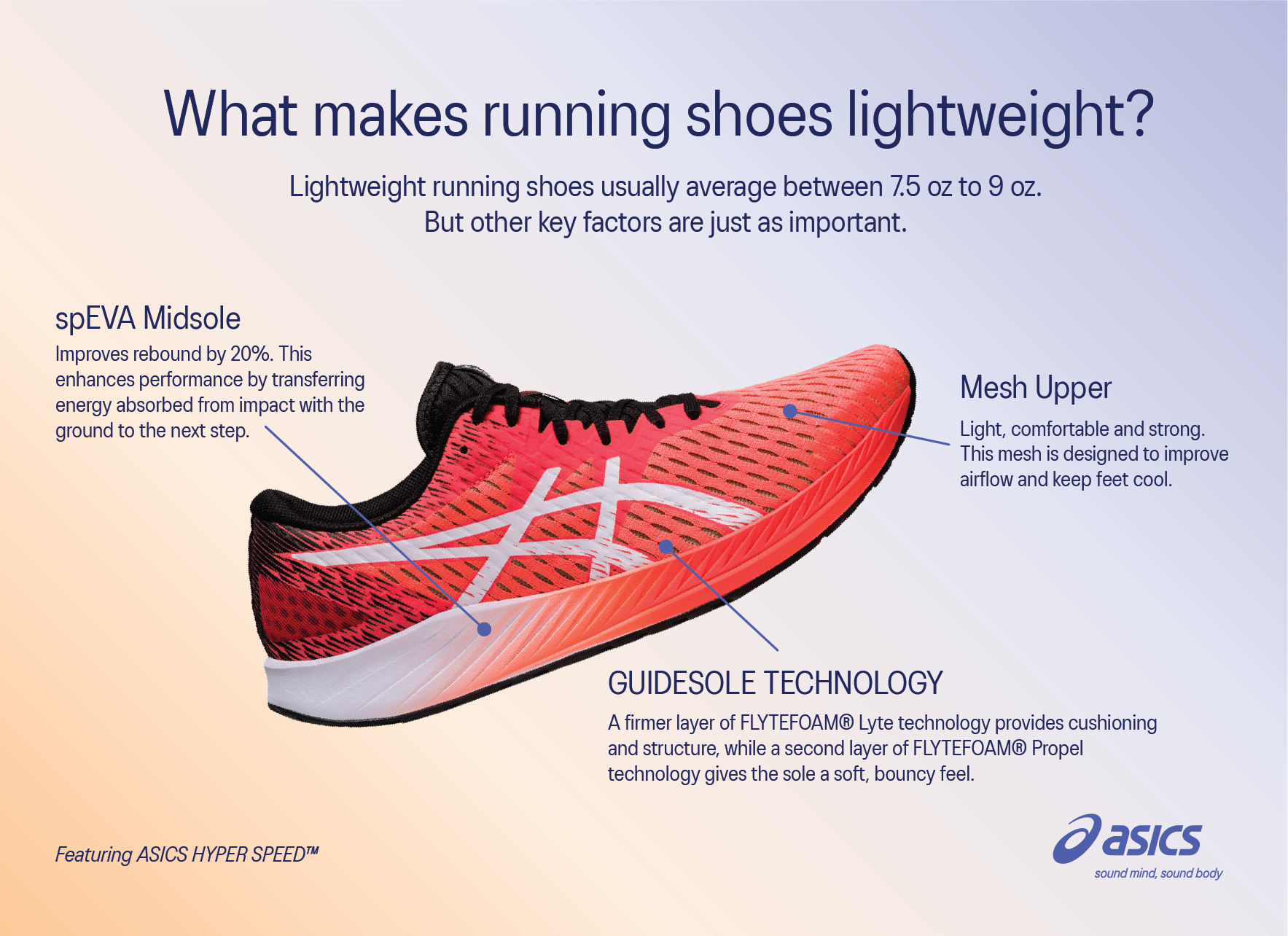
1. Ultra-Lightweight Foam Traditional EVA foam is dense and energy-absorbent. Modern shoes use Pebax-based foams like ZoomX (Nike), Lightstrike Pro (Adidas), or FuelCell 3.0 (New Balance). These materials are 15–20% lighter than EVA and return over 85% of energy—compared to 60% in older foams.
2. Carbon Fiber Plate A stiff, curved plate runs from heel to forefoot. It acts like a lever, reducing calf strain and guiding the foot through an efficient toe-off. Weight? Less than 10 grams. Impact? Enormous.
3. Engineered Mesh Uppers No stitching. Minimal overlays. Laser-cut precision. The upper isn’t just light—it’s form-fitting, reducing slippage and hot spots over long distances.
4. Strategic Geometry These shoes are curved, almost like a rocking chair. This “roll-forward” shape encourages continuous motion, reducing braking forces with each step.
Together, these elements create a shoe that doesn’t just feel light—it works lighter, turning wasted motion into forward drive.
The Controversy: Are They Too Good?
Not everyone celebrates this leap in performance. Critics argue that the technology has turned marathon racing into a footwear arms race.
In 2020, World Athletics introduced regulations limiting: - Sole thickness (max 40mm) - Number of embedded plates (one allowed) - Availability to the public (must be on market for 4 months before use in competition)
Why? To preserve the spirit of competition. If an athlete wins because their shoe gives them a 30-second advantage per mile, is it still a human achievement?
Still, the genie is out of the bottle. Even with restrictions, shoes continue to evolve within the rules. And while some call it “technological doping,” others see it as the natural progression of sport—like faster swimsuits or aerodynamic bikes.
One thing’s clear: the sport has changed. Runners who refuse to adopt this tech are at a measurable disadvantage.
Real-World Performance: Beyond the Elites
You don’t need to be Kipchoge to benefit from lightweight, high-efficiency shoes. Recreational runners are seeing real gains:
- A 2023 study published in Sports Medicine found amateur runners wearing carbon-plated racers improved 5K times by an average of 2.8%
- Marathon finishers using these shoes report less fatigue in the final 10K
- Injury rates? Mixed. Some runners experience increased calf or Achilles strain due to the aggressive rocker shape
The lesson: these shoes aren’t magic. They amplify good form and training—but can expose weaknesses if misused.
Common mistakes when switching to lightweight racers: - Wearing them for daily training (too aggressive, not durable) - Skipping a break-in period (leads to blisters or strain) - Using them on uneven trails (designed for roads)
The ideal workflow: use lightweight trainers for tempo runs, save the record-breaking flats for race day.
Top 5 Record-Linked Lightweight Marathon Shoes
All under 7.5 ounces. All proven on podiums. All contenders in the race to make shoes lighter than a bar of soap—while running faster than ever.
| Shoe | Weight (Men's Size 9) | Key Technology | Record Use Case |
|---|---|---|---|
| Nike ZoomX Vaporfly Next% 3 | 6.8 oz | ZoomX foam, full carbon plate | Kipchoge’s 1:59:40 non-record attempt |
| Adidas Adizero Adios Pro 3 | 7.1 oz | Lightstrike Pro, EnergyRods | Kelvin Kiptum’s 2:00:35 world record |
| New Balance FuelCell RC Elite v3 | 7.0 oz | FuelCell 3.0, dual carbon plates | Boston & Chicago podium finishes |
| Saucony Endorphin Pro 3 | 7.2 oz | PWRRUN PB, nylon plate | Multiple Olympic qualifiers |
| ASICS Metaspeed Sky+ | 6.9 oz | FF Turbo foam, carbon plate | Tokyo Marathon top-5 finishes |
These aren’t just shoes—they’re precision tools. And like any tool, they’re most effective when matched to the right user and event.
The Future: What’s Next
After "Lighter Than a Bar of Soap"?
We’re nearing the practical limits of weight reduction. So innovation is shifting:
- AI-designed midsoles – Brands are using generative design to create lattice structures that minimize weight while maximizing support
- Biomechanical personalization – Insoles and midsoles tuned to individual gait patterns
- Sustainable lightweighting – Using recycled Pebax and algae-based foams without sacrificing performance
The next breakthrough might not be about going lighter—but about going smarter. Shoes that adapt to fatigue, terrain, or weather in real time.
But for now, the legacy of the soap-light racer stands: it has compressed decades of incremental progress into just a few years. It has made the impossible routine. And it has forced us to ask new questions about the boundary between athlete and equipment.
Final Step: Choosing Your Own Lightweight Performer
If you're considering stepping into the world of elite-level lightweight racers, here’s how to do it wisely:
- Assess your goals – Are you racing? Training? Just curious?
- Test before you race – Never wear a new racing shoe on marathon day
- Respect the design – These are not daily trainers. Use them strategically
- Pair with strength work – Lightweight shoes demand stronger calves and ankles
- Accept the price – Most cost $250+. But if you race, the ROI in performance is real
The shoes that shattered marathon records didn’t just change the sport—they redefined what we expect from footwear. Lighter than a bar of soap, yes. But also smarter, faster, and more influential than anyone predicted.
Your next personal best might not require a 2:00 marathon effort. But it might just require a pair of shoes that weigh less than what you leave behind in a hotel bathroom.
FAQ
What does "lighter than a bar of soap" mean in running shoes? It’s a metaphor for extreme lightweight design—modern racing shoes now weigh less than 7 ounces, rivaling the weight of a standard bar of soap.
Which shoe broke the 2-hour marathon barrier? Eliud Kipchoge wore a prototype Nike Vaporfly during the 1:59 Challenge, a specially designed version of the ZoomX Vaporfly Next%.
Are carbon-plated shoes allowed in competition? Yes, but with restrictions. World Athletics limits sole thickness and plate count to maintain fairness.
Can amateur runners benefit from these shoes? Yes—studies show performance improvements even for sub-elite runners, especially in races from 5K to marathon.
Why are these shoes so expensive? Advanced materials like Pebax foam and carbon fiber plates are costly to produce and tune for performance.
Do lightweight racing shoes increase injury risk? Some runners report calf or Achilles strain due to the aggressive rocker shape. Proper adaptation is key.
How long do these shoes last? Most are rated for 150–200 miles. They’re built for racing, not high-mileage training.
FAQ
What should you look for in Lighter Than a Bar of Soap: The Shoes That Broke Marathon Records? Focus on relevance, practical value, and how well the solution matches real user intent.
Is Lighter Than a Bar of Soap: The Shoes That Broke Marathon Records suitable for beginners? That depends on the workflow, but a clear step-by-step approach usually makes it easier to start.
How do you compare options around Lighter Than a Bar of Soap: The Shoes That Broke Marathon Records? Compare features, trust signals, limitations, pricing, and ease of implementation.
What mistakes should you avoid? Avoid generic choices, weak validation, and decisions based only on marketing claims.
What is the next best step? Shortlist the most relevant options, validate them quickly, and refine from real-world results.