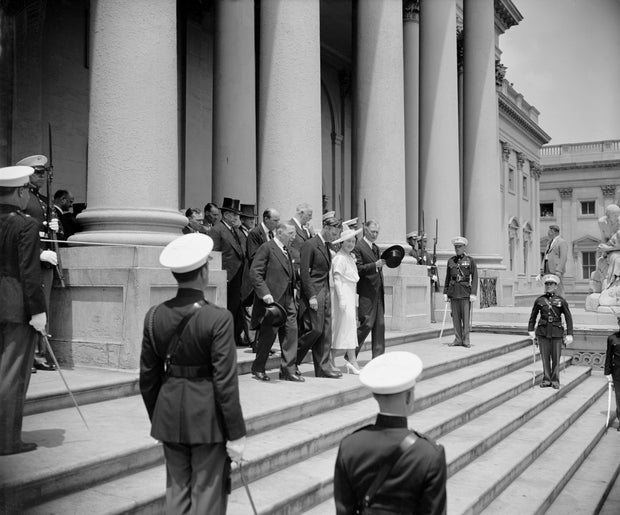
Photographs of British royals on American soil do more than document state visits—they capture moments of diplomacy, cultural exchange, and evolving global relationships. As King Charles III embarks on one of his most significant state visits to the United States, images from past royal trips offer a visual chronicle of how the monarchy has navigated one of its most complex alliances: the transatlantic partnership with the world’s largest democracy.
These moments—frozen in grainy black-and-white or crystal-clear digital resolution—reveal not just pageantry, but the subtle recalibration of image, influence, and soft power over a century.
Edward VIII: The First Royal Tour That Changed the Game
Before there were televised speeches or Instagram posts, Edward VIII made history in 1919 as the first member of the British royal family to visit the United States in an official capacity. Then the Prince of Wales, his tour followed the end of World War I, serving as both a victory lap and a diplomatic gesture to strengthen Anglo-American ties.
Photographs from the trip show a young prince in military uniform shaking hands with veterans, touring battlefields, and standing solemnly at Arlington National Cemetery. One iconic image—Edward placing a wreath at the Tomb of the Unknown Soldier—set a precedent: royal visits to the U.S. would honor shared sacrifice.
But Edward’s visit wasn’t without controversy. His later abdication in 1936 due to his relationship with Wallis Simpson, an American socialite, added dramatic irony to those early images of friendship. The photos remain a reminder: even symbolic unity can be strained by personal choices.
Queen Elizabeth II: The Defining Presence
No royal has shaped the visual narrative of UK-US relations more than Queen Elizabeth II. Over seven decades, her visits produced some of the most enduring images in modern diplomatic history.
Her first U.S. tour in 1957, two years into her reign, included a historic address to a joint session of Congress—the first British monarch ever to do so. The photograph of her standing at the podium, flanked by Eisenhower-era politicians, radiates calm authority. She wore a pale pink Dior gown, a subtle nod to American design, reinforcing soft diplomacy through fashion.
Later visits amplified her symbolic role: - 1976: Bicentennial tour where she cruised the Potomac on the HMY Britannia, waving from the deck in a powder-blue suit. Images of her smiling aboard the royal yacht became iconic, humanizing the monarchy during a tense Cold War era. - 1991: Visiting wounded Gulf War soldiers at Walter Reed, her presence captured in quiet, intimate photos—no speeches, just empathy. - 2007: Return to Jamestown, Virginia, marking 400 years since the first British settlement. The contrast between colonial history and modern royal diplomacy was palpable in photos of her touring reenactments in a wide-brimmed hat and floral dress.
Each visit was meticulously staged, but the photos that endured were those that felt unscripted—the Queen laughing with Bill Clinton, petting a bald eagle at the National Zoo, or waving from an open-top car through Manhattan.
Prince Charles: From Controversy to Continuity
Long before he became king, Charles made multiple trips to the U.S., each marked by shifting public perception. His 1970 tour, as a 21-year-old Prince of Wales, included a photo op at NASA’s Mission Control during Apollo 13—an image that merged British tradition with American innovation.
:max_bytes(150000):strip_icc():focal(728x275:730x277)/princess-catherine-prince-william-donald-trump-king-charles-iii-trump-state-visit-uk-windsor-091725-8672599a27214b6f8ffdbb07fd7596e4.jpg)
But not all moments were smooth. A 1995 visit, shortly after his divorce from Diana, was met with mixed reactions. Paparazzi shots of him looking tense during public appearances contrasted sharply with Diana’s later, wildly popular solo U.S. trips. The visual narrative was clear: public sympathy had shifted.
By the 2000s, Charles had recalibrated his approach. Visits focused on climate activism and architectural preservation—causes he championed long before they gained mainstream traction. A 2011 trip included a photo of him touring a green building in New York with Mayor Bloomberg, a moment that signaled a new kind of royal diplomacy: issue-driven, less ceremonial, more urgent.
Princess Diana: The People’s Princess in America
Though never a reigning monarch, Diana’s U.S. visits left an indelible visual legacy. Her 1989 trip to San Francisco to support AIDS patients produced one of the most powerful royal images of the 20th century: Diana shaking hands with an HIV-positive man without gloves, challenging stigma with a single gesture.
Later visits—like her 1996 tour promoting child welfare—were marked by spontaneous interactions. Photos of her hugging children, kneeling to speak at eye level, or laughing mid-conversation contrasted starkly with the more formal bearing of other royals. American media, which had once scrutinized her relentlessly, began to portray her as a humanitarian force.
Her absence from subsequent royal tours is felt in the archive. No other royal has matched her ability to generate authentic, emotionally resonant imagery on U.S. soil.
Prince William and Kate: Modernizing the Monarchy’s Image
The Duke and Duchess of Cambridge have brought a new aesthetic to royal diplomacy. Their 2011 post-wedding tour—dubbed a “Caribbean and U.S. honeymoon”—included a stop in Los Angeles and New York, where their youth and chemistry played well in media coverage.
A standout moment: William and Kate visiting the 9/11 Memorial, laying a wreath in silence. The photo, shot from behind as they stood hand-in-hand before the reflecting pools, evoked both respect and shared grief.
Their 2022 trip, focused on environmental issues, leaned into digital storytelling. Instagram posts from Yellowstone and Boston Common showed them kayaking, planting trees, and engaging with young activists. These weren’t just photos—they were content designed for a generation that values action over ceremony.
The contrast with older royal visits is subtle but significant. Where past trips emphasized protocol, William and Kate’s imagery emphasizes accessibility. The monarchy, once distant, now looks like a family you might follow on social media.
The Significance of Visual Diplomacy
Royal visits are stage-managed down to the minute, but the most impactful images are often unplanned. That’s the power of photographic diplomacy: a single frame can reshape perception.
Consider the symbolism in wardrobe choices: - Queen Elizabeth’s bright coats ensured she was visible in crowds—a practical move that became a branding masterstroke. - Charles’s eco-friendly suits and tweed jackets silently reinforce his environmental advocacy. - Kate’s accessible fashion (re-worn dresses, high-street brands) communicates relatability.
These visuals aren’t accidents. They’re part of a deliberate strategy to maintain relevance in a republic that abolished monarchy over 240 years ago.
Moreover, photos serve as diplomatic receipts. When a U.S. president is seen laughing with a royal, or when a king tours a disaster zone alongside FEMA crews, the image signals alliance. In an age of rapid news cycles, these moments outlive speeches.
King Charles III’s State Visit: Continuing the Legacy
As King Charles III makes his first state visit to the United States, the photographic narrative takes on renewed importance. This isn’t just a ceremonial trip—it’s a test of whether the monarchy can maintain its transatlantic resonance in a post-Elizabeth era.

Expect images that balance tradition and modernity: - A formal dinner at the White House, echoing his mother’s 1957 visit. - A speech on climate change, perhaps flanked by American scientists. - A quiet moment at a veterans’ memorial, honoring shared military history.
But the most telling photos may come from the margins: Charles listening to a community leader in Detroit, or chatting with students at a Historically Black College. These moments—unscripted, intimate—will define how this visit is remembered.
Already, early images from the tour show a softer, more engaged monarch. One photo, released during a stop in New Orleans, shows him smiling as a local jazz band plays—his hand slightly raised, as if feeling the rhythm. It’s a small moment, but loaded with meaning: the king is not just visiting; he’s connecting.
What These Photos Reveal About Power and Perception
The archive of British royal visits to the U.S. is more than a collection of moments—it’s a study in how symbols evolve. Early photos emphasize hierarchy: royals on balconies, presidents in suits, crowds below. Today’s images are more horizontal: handshakes at eye level, shared laughter, collaborative gestures.
This shift mirrors broader changes in both nations. The U.S. expects accessibility from leaders. The monarchy, to survive, must appear not just regal, but relatable.
Photos also reveal what gets edited out. Behind every perfect frame is a team of handlers, security, and PR strategists. A misstep—a wrong gesture, a poorly timed frown—can go viral. That’s why modern tours are shorter, tighter, more controlled.
Yet even with all the planning, authenticity still breaks through. When Queen Elizabeth chuckled at a Biden joke in 2021, or when Charles paused to comfort a grieving mother in 2023, the camera caught something real. And those are the images that last.
Conclusion: The Lasting Power of a Single Image
As King Charles III walks through Washington, his every move will be photographed, analyzed, and shared. But the most powerful images won’t necessarily come from the official schedule. They’ll come from the pauses, the glances, the unguarded seconds in between.
The history of British royal visits to the U.S., as told through photos, is a story of adaptation. From Edward’s military solemnity to Diana’s compassionate touch, from Elizabeth’s unwavering presence to William and Kate’s digital fluency—the monarchy survives not by resisting change, but by learning how to be seen.
For communicators, diplomats, and leaders, there’s a lesson: in the age of attention, perception is legacy. And sometimes, all it takes is one photo to shift it.
FAQ
Did Queen Elizabeth II visit the U.S. during every decade of her reign? No, but she visited in six different decades: 1950s, 1970s, 1980s, 1990s, 2000s, and 2010s—demonstrating consistent engagement.
What was the most controversial royal visit to the U.S.? Edward VIII’s post-abdication visit with Wallis Simpson in 1939 drew criticism for its timing and perceived insensitivity, given his rejection of the throne for an American divorcee.
Has any British monarch addressed Congress besides Elizabeth II? No. Queen Elizabeth II remains the only British monarch to have addressed a joint session of the U.S. Congress.
Why are royal tour photos so carefully managed? Royal imagery is a tool of soft power. Photos shape public perception, reinforce alliances, and maintain the monarchy’s relevance in a democratic world.
How does King Charles III’s visit differ from past royal tours? It places greater emphasis on climate change, social equity, and youth engagement—reflecting his personal causes—while reducing ceremonial excess.
Are royal visits to the U.S. taxpayer-funded? In the U.S., hosting is covered by American taxpayers. The British government funds the royal travel, though private funds may cover personal aspects.
Which royal generated the most positive media coverage during U.S. visits? Princess Diana consistently received the most favorable press, particularly for her humanitarian work and emotional authenticity.
FAQ
What should you look for in British Royal Visits to the US in Photos Through History? Focus on relevance, practical value, and how well the solution matches real user intent.
Is British Royal Visits to the US in Photos Through History suitable for beginners? That depends on the workflow, but a clear step-by-step approach usually makes it easier to start.
How do you compare options around British Royal Visits to the US in Photos Through History? Compare features, trust signals, limitations, pricing, and ease of implementation.
What mistakes should you avoid? Avoid generic choices, weak validation, and decisions based only on marketing claims.
What is the next best step? Shortlist the most relevant options, validate them quickly, and refine from real-world results.